
Un evento musical sostenible e inclusivo: así ha sido nuestro proyecto
- Esther González Cebrián
- 8 dic 2025
- 4 min de lectura

En el mes de octubre, nuestro alumnado de 4º de la ESO A ha puesto en marcha un reto creativo y muy especial en la asignatura de inglés: diseñar su propio evento musical, integrando no solo la parte artística del espectáculo, sino todos los elementos necesarios para organizar un acontecimiento real, sostenible e inclusivo.
¿En qué ha consistido el proyecto?
Cada grupo debía imaginar, planificar y diseñar un festival o concierto creado desde cero. Para ello, han investigado, debatido, tomado decisiones y dado forma a un evento completo, atendiendo a elementos que habitualmente pasan desapercibidos para el público, pero que son fundamentales para un espectáculo responsable.
Entre las tareas realizadas destacan:
🎤 Selección de artistas
Cada grupo eligió los cantantes o bandas que participarían en el evento. Algunos apostaron por artistas internacionales; otros, por propuestas emergentes o locales. También reflexionaron sobre la diversidad cultural y musical.



🎨 Creación de cartelería
El alumnado diseñó carteles promocionales en inglés utilizando herramientas digitales, como Canva, cuidando la accesibilidad, la estética y la coherencia del mensaje.
💶 Tipos y precios de entradas
Tuvieron que establecer precios y modalidades (general, VIP, reducida, gratuita para ciertos colectivos), justificando decisiones desde la equidad, la inclusión y la sostenibilidad económica.
📣 Marketing y difusión
Los grupos diseñaron un plan de promoción del evento: campañas visuales, difusión en redes, vídeos, hashtags, entrevistas promocionales y estrategias éticas para llegar al público.
🍽️ Comida y necesidades alimentarias
Cada festival incorporó opciones alimentarias variadas: menús vegetarianos, veganos, adaptados a alergias, zonas de hidratación y propuestas de residuos mínimos.
♿ Accesibilidad universal
Un eje fundamental fue garantizar la accesibilidad total: rampas, señalización, espacios reservados para movilidad reducida, intérpretes de lengua de signos, zonas silenciosas y medidas inclusivas para asistir sin barreras.
🚨 Normas de seguridad
Incluyeron medidas como salidas de emergencia, puntos violeta, aforos controlados, asistencia sanitaria y protocolos para un disfrute seguro y respetuoso.
🚍 Hoteles, transporte y movilidad
El alumnado investigó opciones de transporte sostenible, rutas accesibles, alojamiento cercano y medidas para reducir la huella ecológica del desplazamiento.
🎥 Entrevistas simuladas: dando vida al proyecto
Además, cada grupo debía grabar una entrevista simulada en la que dos alumnas o alumnos actuaban como periodistas, entrevistando a las supuestas direcciones del festival.En estas entrevistas, respondían a preguntas sobre: La organización general, la accesibilidad, los artistas invitados, las medidas de seguridad, el plan de sostenibilidad, el presupuesto y el tipo de entradas y la estrategia de marketing.
Estas grabaciones no solo aportaron creatividad y humor, sino que permitieron al alumnado explicar con claridad su proyecto, practicar la comunicación oral y mejorar su espontaneidad y dominio del lenguaje.
¿Qué hemos aprendido?
Este proyecto nos ha permitido:
Comprender la complejidad real de organizar un evento cultural.
Reflexionar sobre sostenibilidad, inclusión, igualdad y consumo responsable.
Desarrollar competencias digitales, lingüísticas, sociales y matemáticas.
Trabajar en equipo, negociar, planificar y justificar decisiones.
Comunicar de forma oral y escrita en contextos reales mediante entrevistas.
Además, hemos trabajado directamente varios ODS clave:




A sustainable and inclusive music event: that's what our project has been like.
In October, our Year 10 students from group A (4th of ESO A) launched a creative and very special challenge in their English class: to design their own musical event, integrating not only the artistic side of the show, but also all the elements necessary to organise a real, sustainable and inclusive event.
What did the project consist of?
Each group had to imagine, plan and design a festival or concert created from scratch. To do this, they researched, debated, made decisions and shaped a complete event, paying attention to elements that usually go unnoticed by the public but are essential for a responsible show.
Among the tasks carried out were:
🎤 Selection of artists
Each group chose the singers or bands that would participate in the event. Some opted for international artists; others, for emerging or local acts. They also reflected on cultural and musical diversity.
🎨 Poster creation
The students designed promotional posters in English using digital tools such as Canva, paying attention to accessibility, aesthetics and message consistency.
💶 Ticket types and prices
They had to set prices and types of tickets (general, VIP, reduced, free for certain groups), justifying their decisions based on fairness, inclusion and economic sustainability.
📣 Marketing and promotion
The groups designed a plan to promote the event: visual campaigns, social media promotion, videos, hashtags, promotional interviews and ethical strategies to reach the public.
🍽️ Food and dietary requirements
Each festival incorporated a variety of food options: vegetarian and vegan menus, allergy-friendly options, hydration stations and minimal waste proposals.
♿ Universal accessibility
A key focus was ensuring full accessibility: ramps, signage, spaces reserved for reduced mobility, sign language interpreters, quiet areas, and inclusive measures for barrier-free attendance.
🚨 Safety regulations
These included measures such as emergency exits, purple points, controlled capacity, healthcare and protocols for safe and respectful enjoyment.
🚍 Hotels, transport and mobility
The students researched sustainable transport options, accessible routes, nearby accommodation and measures to reduce the ecological footprint of travel.
🎥 Simulated interviews: bringing the project to life
In addition, each group had to record a simulated interview in which two students acted as journalists, interviewing the supposed festival directors. In these interviews, they answered questions about: the general organisation, accessibility, guest artists, security measures, the sustainability plan, the budget and ticket types, and the marketing strategy.
These recordings not only added creativity and humour, but also allowed the students to clearly explain their project, practise oral communication, and improve their spontaneity and language skills.
What have we learned?
This project has allowed us to:
Understand the real complexity of organising a cultural event.
Reflect on sustainability, inclusion, equality, and responsible consumption.
Develop digital, linguistic, social, and mathematical skills.
Work as a team, negotiate, plan, and justify decisions.
Communicate orally and in writing in real contexts through interviews.
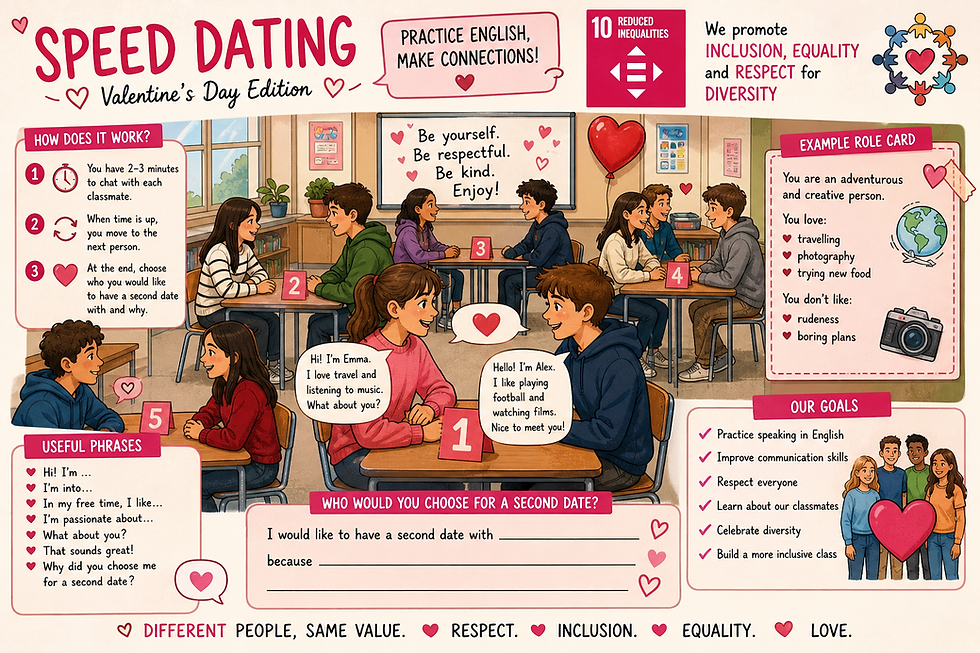
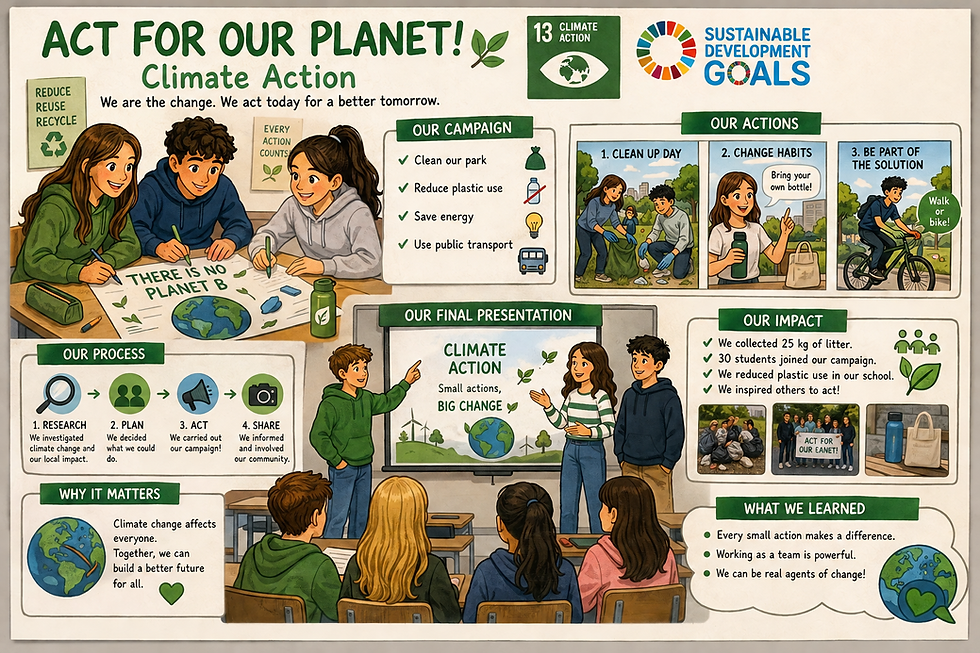
In addition, we have worked directly on several key SDGs:



Comentarios